


ICANN published the 1,615 applications of the 2026 new gTLD round on 7 October 2026. This guide summarises the numbers, the 263 contested strings led by .agent, who applied for the most, 30 notable applications, the key dates to March 2027, and why none of these extensions can be registered before 2028.
Two-Letter Domains: Available Options for Short TLDs
Written by Liam Campbell ·
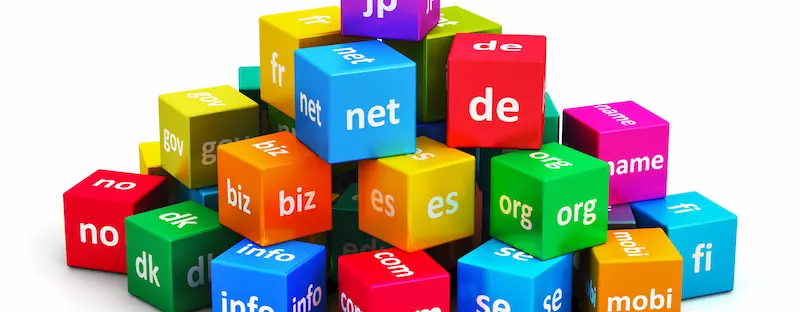
🔍 Summary:
Two-letter domain extensions (technically known as ccTLDs) can be used in two vastly different ways: local SEO and geotargeting or domain hacking and wordplay. However, since each domain has specific requirements (such as residency or business registration), not all are worth the added effort and cost of getting them. This article will take you through when they're a good idea and when they should be passed over generic TLDs.
📋 Table of Contents
- 1. What Are Two-Letter TLDs?
- 2. Why Are Two-Letter TLDs Only Available as Country Codes?
- 3. The Most Popular Two-Letter Domain Extensions
- 4. What Can You Do With a Two-Letter TLD?
- 5. Does a Two-Letter Domain Extension Affect SEO?
- 6. How to Select a Two-Letter TLD
- 7. The Future of Two-Letter TLDs (and Recent Changes)
- 8. Choosing Your Two-Letter Domain
- 9. FAQs
1. What Are Two-Letter TLDs?
As their name suggests, two-letter TLDs are only two letters long. This makes them the shortest possible option for top-level domains (technically, the Internet Assigned Numbers Authority or IANA has reserved single-letter TLDs but bever released them for open registration). This brevity is important for a few reasons, namely branding opportunities or easier domain recognition.
Perhaps more importantly, having a website name that is short can make it easier to put on merchandising, marketing material, and social media referral links.
Technically speaking, all 2-letter TLDs are country code TLDs, reserved for country-specific use (at least at first). Most countries and territories have a local governing body that is usually supported by the government and responsible for maintaining the domain extension and ensuring all websites are compliant with local and global laws. That means those governing bodies are also the ones that assign new domain names, even if you go through third-party registrars.
In practice, this means country codes can get additional registration restrictions. Most commonly, this involves needing a physical address within the territory or having a business registered there, but the actual scope of these can vary significantly.
2. Why Are Two-Letter TLDs Only Available as Country Codes?
Starting with 1984, the IANA used the ISO 3166-1 alpha-2 standard (that provides a two-letter abbreviation for territories to streamline communications) to assign the first country code for the U.S. This practice continued since, with each territory getting a code that most approximately matched their code if it wasn't available (as some territories are only dominions and not sovereign countries).
With this standardized template, the ccTLDs proved useful in two different ways. First, they became instantly recognizable, since two-letter codes have no other meaning and can't unintentionally be used for other purposes. Second, this structure reserved enough space for something that most countries would need to use anyway, ensuring that local SEO structures are built into the domain namespace from the start. Considering there are 26*26 available combinations, that's 676 possible territories, well over the currently registered 250-ish.
Some countries also have strict control over their ccTLDs, requiring residency or local business registration. Others, recognizing that selling domains can be a lucrative source of income, have opened registration to pretty much anyone. This is what led to some creative uses of ccTLDs, allowing businesses to market themselves to an audience where the domain code creates instant recognition.
As with anything, there are a few exceptions to the rules.
First of all is the "countries only." Many smaller territories are dominions of the British Crown or former Western colonies that have since been granted autonomy or were registered as overseas territories. Similarly, the .eu domain (European Union) was granted special status due to the EU's unique political and economic significance.
Secondly, the ISO-to-domain coding isn't perfect. For example, the ISO country code for the United Kingdom is actually .gb, but the country specifically requested to use .uk instead.
3. The Most Popular Two-Letter Domain Extensions
While all (or rather most) two-letter TLDs are country codes, their popularity varies dramatically. This can be based on purely demographic factors, but also on linguistics.
3.1 .cn: China
China's ccTLD has the most domain registrations, with over 33 million registrations, which makes it the second most common TLD overall (after .com). The country has an enormous population, robust digital presence (including a unique search engine that prioritizes Chinese domains), and general preference for local platforms and language to operate in. The domain doesn't require a Chinese address or business, but you do need to provide your business information to ensure your branding aligns with local content requirements.
3.2 .de: Germany
Given that it has over 17 million registered domains, Germany's ccTLD is another excellent marketing opportunity. The domain has a physical address restriction, but most third party registrars can bypass this, such as using Register.Domains trustee service to reference their local contact for registration. The German domain is primarily used by and for German companies, but it also sees a bit of use in Romance-language countries since "de" there means "of" or "from."
3.3 .uk: United Kingdom
The United Kingdom's domain typically uses .co.uk for domain registration, though the shorter .uk has gained traction (at a ratio of about 5-to-1). With over 10 million registrations, it consistently ranks among the top ccTLDs globally, and is primarily used for British businesses or overseas territories.
3.4 .nl: Netherlands
The Netherlands' ccTLD has over 6 million registrations, despite the country's relatively small population. This high registration rate reflects the Netherlands' business-friendly registration policies. The domain is primarily popular among Dutch businesses, but is also increasingly used for creative domain hacks.
3.5 .ru: Russia
Russia's ccTLD has around 5 million websites on it and is primarily used for Russian-language content and businesses targeting Russian consumers. Getting one requires a Business Identification Certificate (for companies) or a Russian passport (for individuals).
4. What Can You Do With a Two-Letter TLD?
While ccTLDs originally meant search engines would use them to target specifically that territory, the simplicity and brevity of having a 2-letters domain meant they could slot into existing words and phrases or be used as abbreviations, creating domains that transcend their original geographic boundaries. Here are some of the most notable examples:
- .io: Originally assigned to the British Indian Ocean Territory, .io has gained traction with tech startups and SaaS companies due to the "input/output" reference in computer science.
- .ai: Anguilla's ccTLD has been adopted by artificial intelligence companies and startups, using the obvious AI abbreviation. This has generated significant revenue for the small Caribbean territory.
- .me: Montenegro's domain works practically perfectly for personal branding and portfolio sites. Companies like About.me have built entire businesses around this extension, and even payment services like PayPal use paypal.me for direct transaction links.
- .tv: Tuvalu's ccTLD became synonymous with media and streaming companies, providing crucial revenue to the small Pacific island nation, with twitch.tv being one of the most prominent examples.
- .co: While technically Colombia's ccTLD, .co is a lucrative alternative to .com, particularly if the intended domain wasn't available in .com (or .org and .net).
5. Does a Two-Letter Domain Extension Affect SEO?
The SEO implications of two-letter ccTLDs are a bit more nuanced than you might think, with effects varying based on how search engines interpret the domain's intended audience.
5.1 Local Search Advantages
Most country-code TLDs appear higher in local search results within their respective countries. For example, if you're using a .de domain, German users searching from Germany will more likely see your site (every other SEO metric being equal).
This naturally means businesses should consider their domain extension as a mechanism to capture in-country leads.
5.2 The Exception: Global ccTLDs
However, Google has also explicitly stated that certain ccTLDs are treated as generic TLDs (gTLDs) rather than geographic indicators. These include .co, .io, .ai, .fm, .me, and several others that have gained widespread international adoption. In general, as soon as a TLD's use starts going beyond its borders to the point you can't ignore it, a search engine might "genericize" it.
With these domains, you don't automatically receive local search preference, but you also don't face geographic limitations.
5.3 Content and Signals Matter More
Ultimately, your TLD is just one of hundreds of ranking factors. Search engines primarily focus on content quality, user experience, backlinks, and relevance. A well-optimized site on a .pl domain can easily outrank a poorly maintained .com site for relevant queries.
What your hosting location, language content, local business listings, and schema markup all contribute to are geographic signals that can point the browser towards what kind of content you have and your target audience. If you're using a .de domain but hosting in the United States and creating English content, a search engine might spot the mismatch and reroute you to primarily American users.
5.4 Best Practices for SEO with Two-Letter TLDs
If you're targeting a specific country, using that country's ccTLD is arguably the best way to gain more traction. Then, use local hosting, relevant language content, and local backlinks, which will all be "picked up" by the search engine as a signal that you're targeting that market.
If you're using a more generic ccTLD (like .io for a tech startup), that goes out of the window. Google and other engines will treat it similarly to .com or .net, meaning the rest of your SEO and webdev infrastructure will matter more.
6. How to Select a Two-Letter TLD
Considering there are over 250 ccTLDs, choosing one can be quite a task.
6.1 Geographic Targeting vs. Global Reach
Your first decision is whether you're primarily serving a specific market or are willing to go global.
If you're looking for the former, such as home professional services or region-specific content, using your country's ccTLD is straightforward and intuitive. It indicates you're local to the country, could potentially boost local SEO, and local customers will recognize their country's extension.
For the latter, consider whether the ability to be witty and creative with a two-letter TLD code outweighs the inherent lack of knowledge about it. A .io domain signals tech-savviness but might confuse less tech-literate audiences who expect traditional extensions.
6.2 Registration Requirements and Restrictions
Before you settle on a TLD for your next venture, you also need to verify the registration requirements. Some of these include:
- Local residency or citizenship
- A registered business within the country
- Local administrative contact
- Specific documentation proving eligibility
Notably, a lot of domain registrars like Register.Domains allow you to set up a trustee service, where the information of their local agents will be used to set up the domain, bypassing most of the location and citizenship requirements.
6.3 Cost
Two-letter domains can be ludicrously expensive compared to the standard .org or .com. Of course, this depends on its popularity and the governing body (or registrar). In general, the smaller the domain (i.e., the country it belongs to), the more expensive its domains will be. The .tv extension, for instance, often costs more than generic TLDs due to its popularity with media companies.
6.4 Brand Fit and Memorability
Some businesses have built memorable brands around creative ccTLD uses:
- Instagr.am (Instagram's original domain, using Armenia's .am)
- Bit.ly (using Libya's .ly)
- Del.icio.us (using the United States' .us)
6.5 Long-Term Stability
Some ccTLDs have been locked or restricted due to geopolitical changes, policy shifts, or mismanagement. While this is rare, domains can be reclaimed due to a lack of regulations and require the Internet Corporation for Assigned Names and Numbers (ICANN) to act to "get it back."
Established ccTLDs from stable countries generally pose minimal risk, while those that are relatively small and from countries that are currently embroiled in any kind of socio-political unrest might be worth steering clear of.
7. The Future of Two-Letter TLDs (and Recent Changes)
The landscape of two-letter domains continues to change as countries come and go. This can spawn an entirely new code that could be an excellent fit for your brand.
7.1 New Countries, New Codes
IANA usually assigns new ccTLDs for countries that reach a semblance of geopolitical recognition.
For example, when the Soviet Union dissolved, its code .su was replaced by a dozen new codes for new countries, starting with Russia's .ru to Latvia's .lv. The newest domain was assigned in 2011 to South Sudan and was opened in 2019, 25 years after the first ccTLD. So maybe your perfect domain name just hasn't been made yet.
7.2 Retirement of Problematic Extensions
IANA has also retired ccTLDs associated with territories that no longer exist or have changed their status. In the Soviet Union's .su example, the domain is technically still in use (mainly for nefarious actors and cybercriminals), but domains like .yu have completely transferred to their successor countries and are no longer available.
More recently, IANA has taken stricter approaches to problematic domains. Extensions associated with spam, fraud, or territories with disputed status face increased scrutiny.
7.3 Commercialization of Creative Use
The trend toward creative ccTLD use is unlikely to stop, given that .com domains are becoming overpopulated and some domains are expensive due to cybersquatting.
This has resulted in significant revenue streams for otherwise small and isolated nations. For example, Tuvalu's .tv domain registrations generate substantial income relative to the country's GDP.
On the flip side, this also means search engines might stop treating a particular two-letter domain as a ccTLD and consider it a generic TLD instead. This largely defeats the purpose of using it to target specific countries or regions, but the other branding benefits still remain.
7.4 Returning to Local Search Preferences
Despite wordplay and domain hacking, most ccTLDs are still practically bound to the country they represent. And as those countries gain more local internet-aware audiences, more companies might retain their interest or keeping things local.
Alternatively, some companies have opted for "defensive registration" to purchase domains across ccTLDs for markets they might plan on expanding to or for preventing cybersquatting.
8. Choosing Your Two-Letter Domain
Two-letter TLDs are an excellent option if they align with your branding or intended audience. But ultimately, a domain extension is only a small part of your digital strategy. While it might make you a bit easier to find, search engines are much smarter when it comes to crawling through your website for what to show to the audience. Quality content, strong branding, and effective marketing matter more than any TLD.
If you've decided that using a ccTLD is the right choice for you, act quickly. Desirable two-letter domains in popular ccTLDs are claimed quickly, and waiting often means settling for less ideal alternatives.
Register.Domains allows you to search across over a hundred country-code TLDs alongside many more generic extensions, including detailed registration requirements and restrictions for each ccTLD, streamlining the process from discovery to setup. From the get-go, you see what your registration will cost and can set up automatic renewals, and we can provide email and DNS hosting, too, to make your next website live in minutes.
Ready to Secure Your Two-Letter Domain?
Find your perfect two-letter domain today with Register.Domains.
Search Domains Now9. FAQs
Can I Use a Two-Letter Domain if I'm Not From That Country?
This depends entirely on the specific ccTLDs' registration policies. Some domains, like .de, require a physical address in the country or using a trustee service, others like .cn might require your domain to be bound to a business ID, and some might not have any restrictions whatsoever. Always check the requirements for your desired extension.
Which Two-Letter Domain Is Best for Tech Companies?
The .io extension has become the de facto standard for tech startups and SaaS companies due to its association with "input/output." The .ai domain is also increasingly popular for artificial intelligence and machine learning companies.
Do Two-Letter Domains Cost More Than .com?
Most established ccTLDs cost comparable to .com domains, though some premium extensions like .tv may cost significantly more. Domains in countries you're native to that which require a physical address for registration can cost quite a bit if you account for trustee services.