8.7M
.ZA
South Africa
649K
.MA
Morocco
584K
.NG
Nigeria
549K
.KE
Kenya
188K
.LY
Libya
113K
.TZ
Tanzania
110K
.ZW
Zimbabwe
96K
.TN
Tunisia
83K
.UG
Uganda
79K
.AO
Angola


Your cart is empty
For email assistance, just contact us
Written by Steven White ·
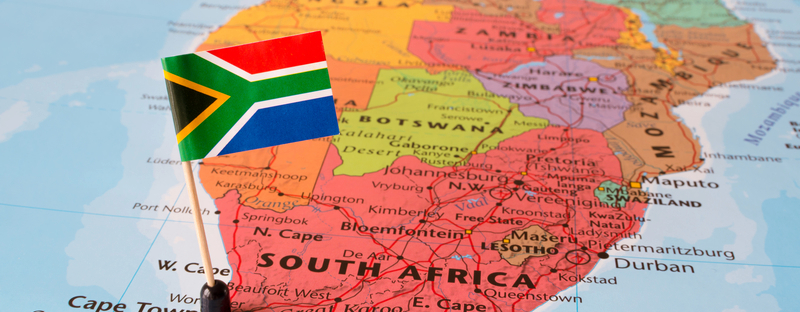
🔍 Summary:
Most African domain names can be registered from anywhere. Of the 22 African country-code domains (ccTLDs) we sell, 13 are open to anyone, including .co.za, .ng and .ke, while 6 require a local presence: .eg, .tn, .dz, .zm, .re and .yt. Register.Domains covers four of those (.eg, .zm, .re and .yt) with its Trustee service, and the pan-African .africa domain is open to anyone; compare every option on our African domains page.
African ccTLDs offer unique opportunities for localization and market penetration across the continent's 54 countries. South Africa's .za leads with 8.7M domains—representing over 70% of legitimate African ccTLD usage—followed by Morocco's .ma (649K), Nigeria's .ng (584K), and Kenya's .ke (549K). While some domains like .eg (Egypt) require strict local presence, others like .za and .ng are globally accessible. The African domain landscape showcases legitimate business growth, making ccTLD selection crucial for establishing trust and local SEO advantages across African markets.
Africa's digital transformation is accelerating rapidly, with internet penetration growing at double-digit rates across the continent. As businesses recognize the immense potential of African markets—with a total population of over 1.5 billion and some of the world's fastest-growing economies—understanding the landscape of African country-code top-level domains (ccTLDs) has become essential for any serious digital strategy targeting the continent.
South Africa's .za dominates the African ccTLD landscape with 8.7 million domains—over 13 times larger than the next biggest ccTLD. Morocco (.ma), Nigeria (.ng), and Kenya (.ke) form the next tier with 500K-650K domains each, representing the continent's major growth markets.
Africa represents the world's fastest-growing internet market, with mobile internet adoption rates exceeding 15% annually in key markets like Nigeria, Kenya, and Ghana. Unlike mature markets where generic domains dominate, African internet users show strong preference for local ccTLDs, particularly in francophone and anglophone markets where local identity plays a crucial role in online trust.
Key Insight: African consumers are 4x more likely to trust and engage with websites using their country's ccTLD compared to generic domains, according to recent digital behavior studies across major African markets.
The African domain landscape is characterized by several unique factors that make ccTLD strategy critical:
The African domain landscape underwent a dramatic transformation in 2023 that fundamentally changed the ccTLD rankings and legitimacy. For years, four African ccTLDs—.ga (Gabon), .cf (Central African Republic), .ml (Mali), and .gq (Equatorial Guinea)—dominated global statistics with millions of free domain registrations through Freenom.
The Freenom Cleanup: In 2023, over 99.99% of .ga domains were removed when Gabon terminated its contract with Freenom due to massive abuse. Similar cleanups affected .ml, .cf, and .gq, removing millions of spam and inactive domains from the African domain space.
This transformation revealed the true, legitimate African domain market:
The cleanup eliminated the artificial inflation that had skewed African domain statistics for nearly a decade, creating a more accurate picture of legitimate business usage across the continent.
Understanding the hierarchy of African ccTLDs requires looking beyond raw numbers to consider economic significance, business adoption, and growth potential. Here's the comprehensive breakdown:
| Rank | ccTLD | Country | Active Domains | Market Penetration | Business Adoption |
|---|---|---|---|---|---|
| 1 | .za | South Africa | ~8.7 million | 145 per 1000 people | Very High |
| 2 | .ma | Morocco | ~649,000 | 18 per 1000 people | Moderate |
| 3 | .ng | Nigeria | ~584,000 | 2.7 per 1000 people | High Growth |
| 4 | .ke | Kenya | ~549,000 | 10 per 1000 people | High Growth |
| 5 | .ly | Libya | ~188,000 | 27 per 1000 people | Specialized |
Africa's digital powerhouse with the continent's most mature domain market. .za dominates with nearly 9 million domains, representing over 80% of all African ccTLD registrations.
North Africa's gateway and francophone leader. Strong business adoption with nearly 650,000 domains, making it the second-largest African ccTLD market.
Africa's most populous country and largest economy by GDP. Rapid fintech and e-commerce growth driving strong domain adoption with nearly 600,000 registrations.
East Africa's tech hub and innovation center. High mobile money adoption and vibrant startup ecosystem supporting over 550,000 domain registrations.
Beyond the top markets, several African ccTLDs serve important regional and economic functions:
African search engines and Google's regional versions heavily weight ccTLDs for local search relevance, making them crucial for organic visibility:
Real-World Impact: Websites using African ccTLDs see an average 67% higher ranking for country-specific searches compared to .com domains, with particularly strong effects in markets like South Africa, Nigeria, and Kenya.
African consumers associate local domains with legitimacy, local support, and cultural understanding:
Securing your brand across African ccTLDs is essential for comprehensive market protection:
| Protection Level | Domains to Register | Annual Cost Estimate | Markets Covered |
|---|---|---|---|
| Essential | .za, .ng, .ke, .ma | $80-150 | 60% of African internet users |
| Comprehensive | + .tn, .eg, .ug, .gh | $200-350 | 80% of African internet users |
| Complete | All major markets | $500-800 | 95% of African internet users |
African ccTLDs range from fully open to reserved for local companies and residents. The table lists every African country-code extension Register.Domains sells, whether the registry requires a local presence, and whether our Trustee (local presence) service covers it. It has no prices, because they change often: see the live ccTLD price list.
Verified in September 2026 against our own registration pages and service list. Registry policies change; each extension links to its page with the current rules.
| Extensions we sell | Country | Who can register | Local presence required? | Trustee service |
|---|---|---|---|---|
| .eg, .com.eg | Egypt | Companies from any country (not individuals); the domain must match the company name or a trademark (Egyptian or WIPO Madrid) | Yes, a local representative | Yes |
| .co.zm, .com.zm | Zambia | Zambian citizens and residents | Yes | Yes |
| .re | Réunion | People and companies based in the EU, Iceland, Liechtenstein, Norway or Switzerland | Yes, in Europe | Yes |
| .yt | Mayotte | People and companies based in the EU, Iceland, Liechtenstein, Norway or Switzerland | Yes, in Europe | Yes |
| .tn, .com.tn | Tunisia | Companies established in Tunisia or people living in Tunisia | Yes | Not available online; ask our support team |
| .dz, .com.dz, .tm.dz | Algeria | Presence in Algeria plus a trademark registered with INAPI that matches the domain exactly (applications do not count) | Yes | No |
| .ma, .co.ma, .net.ma | Morocco | Anyone with ID or company documents; a Moroccan administrative contact is mandatory | No (our local partners act as the admin contact) | Not needed |
| .sn, .com.sn | Senegal | Businesses from any country (not individuals); the name must match the business name, initials or one of its products | No | Not needed |
| .com.gh | Ghana | Companies with a business registration or licence; individuals with a passport or ID | No | Not needed |
| .cv, .com.cv | Cape Verde | Anyone, including foreign individuals and companies (.org.cv: non-profits only) | No | Not needed |
| .co.za, .net.za, .org.za, .web.za | South Africa | Anyone, including foreign individuals and companies | No | Not needed |
| .ng, .com.ng, .net.ng | Nigeria | Anyone, including foreign individuals and companies | No | Not needed |
| .ke, .co.ke, .or.ke, .me.ke | Kenya | Anyone, including foreign individuals and companies | No | Not needed |
| .com.ly | Libya | Anyone, including foreign individuals and companies | No | Not needed |
| .tz, .co.tz | Tanzania | Anyone, including foreign individuals and companies | No | Not needed |
| .co.zw | Zimbabwe | Anyone, including foreign individuals and companies | No | Not needed |
| .ug, .co.ug, .com.ug | Uganda | Anyone, including foreign individuals and companies | No | Not needed |
| .co.ao, .it.ao | Angola | Anyone, including foreign individuals and companies | No | Not needed |
| .mu, .co.mu, .com.mu | Mauritius | Anyone, including foreign individuals and companies | No | Not needed |
| .co.bw | Botswana | Anyone, including foreign individuals and companies | No | Not needed |
| .na, .co.na, .com.na | Namibia | Anyone, including foreign individuals and companies | No | Not needed |
| .co.mz, .net.mz, .org.mz | Mozambique | Anyone, including foreign individuals and companies | No | Not needed |
How to read it: "local presence" means the owner must be a resident, a locally registered company, or be represented by a local contact. Where we offer the Trustee service, our local representative registers the domain for you and you keep the use of it, for an extra fee. For how trustee services work and the local presence rules of other countries, see our guide to ccTLD local presence requirements.
If you want one address for the whole continent instead of one ccTLD per country, the .africa domain is open to anyone, including individuals and foreign companies.
Your African domain strategy should align with your business objectives, target markets, and expansion timeline. Here's a strategic framework:
| Strategy | Best For | Pros | Cons |
|---|---|---|---|
| Single Market Focus One primary ccTLD |
Startups, SMEs targeting specific country | Low cost, focused localization, strong local presence | Limited expansion flexibility, no brand protection |
| Regional Approach 2-3 ccTLDs by region |
Mid-size businesses, regional expansion | Balanced cost/coverage, manageable complexity | May miss key markets, partial protection |
| Multi-Market Strategy 5+ major ccTLDs |
Large enterprises, pan-African operations | Maximum local trust, comprehensive SEO | Higher costs, complex management |
| Hybrid Model .com + key ccTLDs |
Growing businesses, international brands | Global consistency, local optimization | Moderate complexity and investment |
Recommendation: Most businesses benefit from starting with the "Big 4" African ccTLDs (.za, .ng, .ke, .ma) which cover approximately 60% of Africa's internet users and major economic centers, then expanding based on business growth and market opportunities.
What an African domain costs depends much more on the extension than on the country, and prices change often, so this section lists no amounts: the current price of every African extension is on our African domains page and in the ccTLD price list. What does not change is how the price is built (checked September 2026 against the Register.Domains price list):
| Cost factor | What to expect | Examples |
|---|---|---|
| Range between extensions | From about the price of a .com to far above it | .co.za costs about the same as a .com; .na is the most expensive extension in this guide |
| Top level vs. second level | The second-level version often costs much less than the top-level one | .com.na vs .na, .com.eg vs .eg, .co.ke vs .ke, .com.ng vs .ng |
| First year vs. renewal | A few extensions have a promotional first year and renew at a higher price; most cost the same every year | Promotional first year: .co.za, .ke, .co.ke, .com.gh |
| Local presence | Where the registry requires a local presence and we offer the Trustee service, it is an extra yearly fee on top of the domain | .eg, .com.eg (see section 5) |
Other costs to budget for:
The African domain landscape is evolving rapidly alongside the continent's digital transformation. Key trends shaping the future:
With Africa leading global mobile adoption, domain strategies must prioritize mobile user experience and mobile payment integration.
The African Continental Free Trade Area (AfCFTA) is driving demand for multi-country domain strategies and regional approaches.
Rapid growth in mobile money and fintech is making local domains essential for payment processor integration and regulatory compliance.
Increased government digital services are creating new requirements and preferences for local domain usage in business applications.
2025 Outlook: We project 25-40% annual growth in business-focused African ccTLD registrations, driven by increasing e-commerce adoption, fintech expansion, and government digitalization initiatives across major African economies.
African ccTLDs represent more than digital addresses—they're gateways to the world's fastest-growing consumer markets and emerging economies. The 2023 domain landscape cleanup revealed the authentic, business-focused growth happening across African digital markets, making ccTLD selection more important than ever for serious market entry.
The strategic advantages are compelling:
Whether you're entering your first African market or expanding across the continent, the right domain strategy can determine your success in establishing local credibility and capturing market share in these high-opportunity economies.
Start building your position in Africa's high-growth digital markets with comprehensive ccTLD coverage across the continent's key economies.
Register African DomainsSuccess in African markets requires understanding that your domain choice is often the first signal of your commitment to local markets. In economies where trust and local presence matter more than price, the right ccTLD strategy can be the difference between being seen as a foreign company and being welcomed as a trusted local partner.
Quick access to popular African ccTLDs: .za | .ng | .ke | .ma | .tn | .eg | .ug

A business outside Thailand can register a .co.th with a trademark or company name and a representative in Thailand. This guide, checked against the T.H.NIC registration guideline of March 2026, explains the three routes, the documents, what changed in 2026, the naming rules, .co.th vs .in.th vs second-level .th (round 3 of 2026 open until 30 November), the expiry timeline and why there is no UDRP for .th.

Google Registry's .eat, .fly and .here reach General Availability on 17 November 2026 at 16:00 UTC. This guide covers the Sunrise and Early Access dates, the HTTPS rule and which extensions browsers already enforce it on, the route that fits trademark owners and everyone else, and the outdated dates other sites still quote.

ICANN published the 1,615 applications of the 2026 new gTLD round on 7 October 2026. This guide summarises the numbers, the 263 contested strings led by .agent, who applied for the most, 30 notable applications, the key dates to March 2027, and why none of these extensions can be registered before 2028.