
Zone files and registry RDAP data show about 2,700 .eat, .fly and .here domains registered in the first 25 hours of general availability on 17-18 November 2026, more than ten times the sunrise total. Counts by extension and launch phase, the first-two-hours rush, and the shift from brand-protection registrars in sunrise to retail registrars on opening day.
Steps to Obtain a .za Domain Extension
Written by Steven White ·
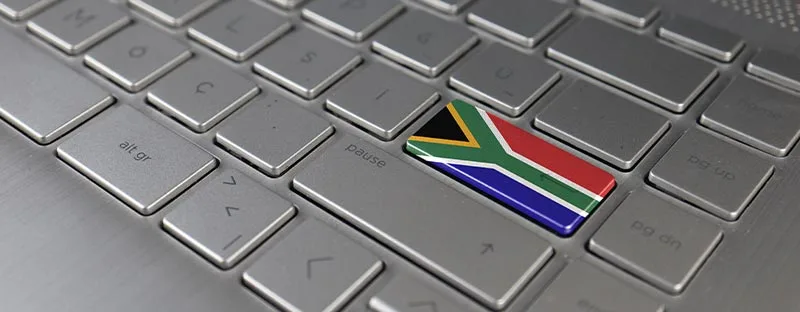
Setting up a website? If so, you’ve got lots of domain names to choose from to cap off the end of your web address. You could go down the most popular route and pick a .com address. Or you could do things a bit differently and elect for an alternative extension, like .za.
This guide covers what .za is and how to get a .za web address.
An Introduction to the .za Extension
.za is one of the many domain names that fall into the bracket of country-code top-level domains, or ccTLDs, for short. These domain names are assigned to individual countries across the globe. Lots of countries have their own ccTLD – there’s .de for Germany, .uy for Uruguay, .sg for Singapore, and so on. .za is the ccTLD for the nation of South Africa.
You might wonder why South Africa doesn’t use .sa as its domain name. Well, for starters, .sa is already taken by Saudi Arabia, and .za is short for Zuid-Afrika, which is the Dutch name for South Africa, and the nation has a long history of Dutch colonization and associations with the Netherlands.
Another thing to note about the .za domain is that it operates using a second-level system. That means you don’t just get .za at the end of your web address. Instead, you can have something like .co.za, .net.za, or .web.za.
Rules and Restrictions for .za Domain Registration
Like other ccTLDs, .za was introduced to give South African brands and people an option to set up their own websites and build their own nationalized section of the World Wide Web. As such, lots of the big South African banks, government entities, schools, and businesses have .za websites. But, unlike other ccTLDs, .za isn’t just restricted to South African nationals.
So, even if you’re outside of South Africa, you can create your own .za site and use the various second-level variants of .za, like .co.za.
How to Get a .za Extension: Step-by-Step
Since .za domain registration is open to all, getting your own .za site is quite a quick, easy process. You don’t have to prepare any ID documentation in advance or worry about adhering to specific rules. Here’s the whole process, broken down into steps:
- First, it’s best to check that your desired domain name hasn’t been claimed by anyone else. You can run an availability check to confirm your name is available, and most good registrars will offer this as part of the process of claiming your site.
- As long as the name is available, you can go ahead and start your order for the domain via a trusted registrar.
- Choose the type of second-level .za domain you want (.co.za, .net.za, etc.) and confirm your details.
- Pay the relevant fees to confirm ownership of your new domain.
Reasons to Acquire a .za Domain Name
Why would you need a .za domain? Here are just some reasons:
People and Businesses Based in South Africa
This is obvious, but still worth mentioning, as the vast majority of .za site owners are people or businesses (or non-profits and other entities) based in South Africa itself. This makes sense, as the .za domain was always intended to be used among South African people and has the most relevance to the South African market.
Brands Expanding Into South Africa, or Africa in General
.za isn’t just for businesses and entities already situated in South Africa. It can also appeal to brands that are thinking about expanding into the South African market or Africa in general and want to establish a clear digital presence for African people to connect to. You might have a business based in Europe, for instance, but want to start offering goods and services in South Africa via a .za site.
People Seeking an Alternative TLD to the Norm
There are also cases when people opt for ccTLDs like .za just as an alternative to the usual options, like .com and .net. Or, you might have a particular name in mind that you want to use for your website, but the .com version is already taken. So, setting up a .za site could be a simple alternative to let you claim your name without having to make any wholesale changes.
Register Your .za Site Today
If .za feels like the right fit for your website, consider .za registration today. The sooner you act, the sooner you’ll be able to start using and enjoying your .za website, and the less risk you’ll have of your name being taken by anyone else.