


An event study of the .com wholesale price increases of 2021-2024 with ICANN's monthly registry reports: renewals rose 36.4% and 38.3% before the 2021 and 2022 increases, and TurnCommerce (NameBright) accounted for 90.5% and 93.8% of the extra renewals. Without it the market moved 0.5%-3.5%, within normal monthly variation. Includes the registrar's month-by-month renewals, Verisign's own filings on early renewals, the first data on the November 2026 increase and when the October report will show the answer.
Getting a .ly Domain – How and Why
Written by Steven White ·
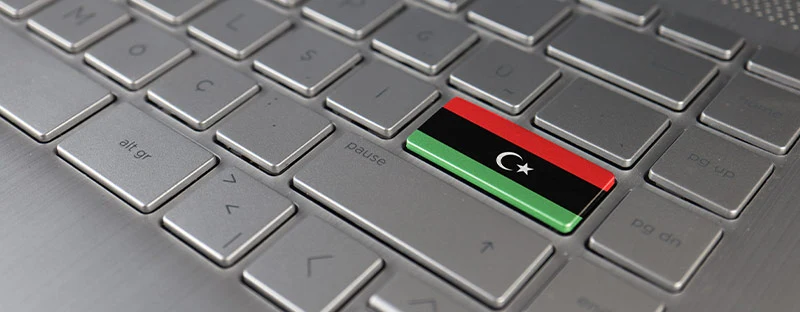
The majority of website addresses end with the famous .com top-level domain (TLD). But .com is far from the only TLD out there. You might also see sites that end with .ly, for example, bit.ly or visual.ly. Indeed, the .ly TLD is quite a popular option among tech companies and startups.
But what is .ly and how does it work? Read on for an explanation of the .ly TLD, including some benefits of using it, along with a couple of potential drawbacks.
Introducing the .ly Domain
First, let’s look at what .ly is. The extension .ly is the official domain extension for the nation of Libya. It’s part of a category of TLDs called ccTLDs, or country-code TLDs. As the name suggests, country-code TLDs are designed specifically for use in various countries around the world, like:
- .it for Italy
- .uk for the United Kingdom
- .br for Brazil
Compared to other TLDs, .ly isn’t hugely popular. It’s not even in the top 150 TLDs, according to recent stats, but it’s still used for a small selection of sites, including some quite successful ones.
How to Get a .ly Domain
While the .ly extension was created primarily for Libyan organizations and businesses, that doesn’t mean you have to be Libyan to have a .ly site. There aren’t actually any restrictions or strict conditions for setting up a .ly TLD.
All you need to do is:
- Come up with a domain name you want to use.
- Use an availability checker to ensure that your name with the .ly extension is available.
- Register your site, ideally with the aid of an official registration service.
The Advantages of .ly Domains
Reasons to use a .ly domain include:
Accessible
Some ccTLDs and other sorts of TLDs have strict restrictions about who can use them and how they’re used. You have to actually live in some countries to use their ccTLD on your website, for instance. But the .ly TLD is accessible to anyone.
Affordable
Setting up a site can be quite costly. If you’re on a strict budget, you might not necessarily want the expense of a .com or similar extension. Using a .ly site could be a cheaper choice, helping you save money or invest it elsewhere, like in web design services to improve your site’s functionality.
Available
As touched on earlier, .ly isn’t hugely popular. There aren’t millions of .ly sites out there, especially when compared to the huge number of .com and .net sites. So, it’s usually easier to get the exact name you want when you pick a TLD like .ly.
Short and Snappy
It’s well-known that the best web addresses tend to be short and snappy, as that makes them much easier for people to remember. So, it helps to use a simple, two-letter TLD where possible. The extension .ly fits the bill and may help people remember and type your website more comfortably.
Wordplay Opportunities
Since –ly is a common suffix in the English language, the .ly TLD offers a lot of fun potential for clever, funny, or quirky wordplay-based web addresses. There are already lots of .ly sites out there taking advantage of this, like mother.ly and time.ly, for instance.
Ideal for Libya
Last but not least, the .ly is obviously a great choice for anyone based in or doing business in Libya. It can help you get better SEO results on Libyan search engines and appeal to the Libyan population, perfect for any stores selling in Libya or businesses offering services there.
The Downsides of .ly Domains
The extension .ly isn’t perfect. There are some issues with choosing this TLD:
Lack of Relevance Outside Libya
The .ly TLD is clearly very relevant to Libyan people and businesses. But even though it can produce fun wordplay in English, it’s not as relevant or appropriate for audiences in countries like the U.S., for example, who are more used to typing .com at the end of almost every website.
Possible SEO Issues
A .ly web address may boost your SEO performance in Libya. But, everywhere else around the world, your site might struggle to rank as highly as it would with a more common generic TLD, like .com. So, if you want to reach the biggest audience, .ly might not be quite right.
Consider Registering Your .ly Website
So, after weighing up the pros and cons, if the .ly extension seems the right fit for you, all that’s left to do is register your .ly domain. To do this, simply find a trusted domain registration platform, input your name, and follow the steps to bring your site to life.